The Best National Parks to Visit in September — Ranked by Data
The best national parks to visit in September are Wrangell–St. Elias, Guadalupe Mountains and Gateway Arch — ranked by a fixed formula over official NPS crowd data (2021–2025), NOAA weather normals and daylight, with seasonal closures counted against inaccessible parks.
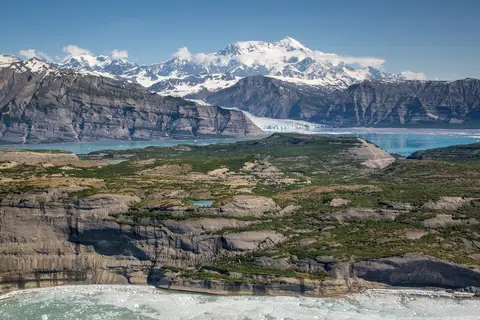
Wrangell–St. Elias in September
Score 84/100 · 25% of peak crowds · highs 56°F · 13h daylight
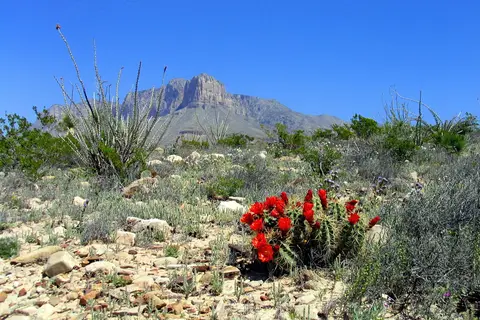
Guadalupe Mountains in September
Score 81/100 · 35% of peak crowds · highs 80°F · 12.4h daylight

Gateway Arch in September
Score 80/100 · 29% of peak crowds · highs 81°F · 12.5h daylight
Top 10 for September
| # | Park | Verdict | Score | Crowds vs peak | High/Low | Daylight |
|---|---|---|---|---|---|---|
| 1 | Wrangell–St. Elias National Park | Best window | 84 | 25% | 56°F/33°F | 13h |
| 2 | Guadalupe Mountains National Park | Best window | 81 | 35% | 80°F/58°F | 12.4h |
| 3 | Gateway Arch National Park | Best window | 80 | 29% | 81°F/57°F | 12.5h |
| 4 | Isle Royale National Park | Best window | 79 | 39% | 65°F/44°F | 12.6h |
| 5 | Crater Lake National Park | Best window | 77 | 49% | 63°F/37°F | 12.5h |
| 6 | Lassen Volcanic National Park | Best window | 77 | 47% | 72°F/41°F | 12.5h |
| 7 | Denali National Park | Best window | 76 | 36% | 50°F/33°F | 13.1h |
| 8 | Gates of the Arctic National Park | Best window | 75 | 40% | 50°F/33°F | 13.3h |
| 9 | Great Sand Dunes National Park | Shoulder | 75 | 53% | 72°F/44°F | 12.5h |
| 10 | Badlands National Park | Shoulder | 74 | 56% | 79°F/47°F | 12.6h |
Score = 45% weather comfort (NOAA 1991–2020 normals) + 35% quietness (NPS visitation 2021–2025) + 20% daylight, with penalties where headline access is typically closed. Identical formula for every park. Methodology.
What the top 10 call for in September
- Fleece jacketWhy: 7 of the top 10 have lows between 32°F and 45°F.
- Packable rain jacketWhy: 6 of the top 10 get between 2″ and 3.5″ of precipitation.
- Sturdy hiking bootsWhy: worth having at every park, in every month.
Counted from NOAA weather normals. Each park's September page has its own list. Affiliate links: VisitWhen earns from qualifying purchases, at no extra cost to you. Prices can change; Amazon shows the current one.
Think twice in September
At the other end of the ranking: Death Valley (harsh conditions). Every park's page explains exactly why, with the underlying numbers.
Planning notes for September from the park service
Read the September notes for 48 parks
- Acadia: September still needs a booking for the drive up Cadillac Mountain: Acadia's 2026 reservation season ran from May 20 to October 25. Thirty percent of slots go on sale 90 days ahead and the remaining 70 percent two days before, each release at 10 a.m.
- Arches: From mid-September, Arches enters its second temperate season (through October), the park service says, with highs averaging 60 to 80°F and lows 30 to 50°F; temperatures can still swing more than 40 degrees in a day. It remains busy season, so a long line at the entrance is likely between 8 a.m. and 3 p.m.
- Badlands: September eases Badlands' heat, with average highs near 81°F and nights in the low 50s, and about an inch of rain. The park says weather here is variable and unpredictable all year, so pack layers for cool mornings.
- Big Bend: September is still summer heat at Big Bend: the park service counts it in the May-through-September stretch when most of the park tops 100°F by late morning. The comfortable season it recommends starts in late fall and runs through early spring.
- Biscayne: By September the Elliott Key trails can be overgrown in places, because the park notes that foliage grows all year and fast in the warm, humid climate. There are two: a one-mile loop between the bay and ocean sides that starts at the marina, and Spite Highway, which runs about six miles down the middle of the island through tropical hardwood hammock.
- Bryce Canyon: September at Bryce Canyon is similar to June, the park says, with an average high of 70°F and a low of 42°F, though summer monsoon storms can still occur until the end of the month. The shuttle season continues until mid-October, and North Campground's peak reservation season runs to October 4 in 2026.
- Canyonlands: Mid-September begins Canyonlands' fall season, one of its two temperate and most popular stretches, along with spring, when daytime highs average 60 to 80°F. Even so, the park almanac gives September an average high of 88°F, and late-summer monsoon storms can bring flash floods.
- Capitol Reef: September closes Capitol Reef's summer monsoon season, which usually runs from July to September, and storms can still send flash floods through the canyons, so check the National Weather Service flash-flood rating before a canyon hike. Afternoons usually reach about 80°F.
- Carlsbad Caverns: September is still bat season at Carlsbad Caverns, which runs April through October according to the park service. The evening Bat Flight Program in the amphitheater is free and does not take reservations, and the park notes that program times vary from year to year.
- Congaree: September starts Congaree's autumn, which the park counts among the best times to visit: average daily temperatures in the 70s°F, low humidity and roughly 3 inches of rain a month. Water levels are ideal for paddling Cedar Creek in the fall, and colours along the waterways peak between late October and early November.
- Crater Lake: September closes out the summer season at Crater Lake, which the park service puts at July through mid-September. From mid-September, warm days typically give way to cool or cold nights, and fire season often runs into late September and October, so smoke can affect air quality.
- Cuyahoga Valley: September cools Cuyahoga Valley to average days of 72°F and nights of 54°F, with about 4 inches of rain, by the park's climate table. A Towpath Trail section between the Boston Trailhead and Lock 29 in Peninsula is tentatively closed for repairs from August 24 to November 20, 2026, so plan rides around that gap.
- Denali: September is the end of Denali's bus season. In 2026 the Natural History Tour ran until September 15 and the Tundra Wilderness Tour until September 17, and because of the Pretty Rocks Landslide no bus went past mile 43 of the park road.
- Death Valley: September at Death Valley can still be very hot, and the park service's heat advice holds: skip the valley floor trails while it is hot, drink a gallon of water or more each day and watch for heat illness. It is also a month to plan ahead for the cooler season: Furnace Creek Campground's reservation season opens on October 15, and bookings can be made up to six months in advance on recreation.gov.
- Gateway Arch: September is when Gateway Arch crowds thin out, the park says, as children go back to school, and the extended summer evening hours end on Labor Day. The daily mean temperature is around 70°F.
- Glacier: For Glacier in September, timing matters at Logan Pass. In 2026 the three-hour parking limit and the ticketed Logan Pass Shuttle both ran only until Labor Day, September 7, and the park service said neither would continue past that date, so normal parking rules returned afterwards.
- Glacier Bay: September brings Glacier Bay's season to a close in early September, after which visitor services become very limited. The park says September and October tend to be the wettest months of the year.
- Great Basin: September is when Great Basin's aspens start turning: the park service says fall colour typically develops from about the second or third week of the month, in yellow, red and gold groves along the mountains. Fall also brings cool air, quiet trails and roomy campsites, without the summer crowds.
- Grand Canyon: September eases Grand Canyon into fall. The summer rains usually fade by mid-September, and rim highs fall into the 60s°F, while the river stays in the 90s.
- Great Sand Dunes: September has some of the best weather of the year at Great Sand Dunes, the park says, averaging 71°F by day and 42°F at night. Aspens turn gold through the month, starting at the highest elevations, and lower groves peak in late September to early October.
- Great Smoky Mountains: In September, as in every month, Great Smoky Mountains asks for a parking tag on any stop over 15 minutes, not for driving straight through. A day tag is $5 and a week tag $15, from the park's fee machines or Recreation.gov; both expire at 11:59 p.m.
- Grand Teton: September is when Grand Teton's campgrounds begin to close. On the park's 2026 schedule, Colter Bay Tent Village shut on September 7, Lizard Creek on September 13, and Jenny Lake and Colter Bay campgrounds on September 27; the Colter Bay Visitor Center closed September 30.
- Guadalupe Mountains: September ends the Guadalupe Mountains' rainy season, with about 2.3 inches of rain and afternoon highs near 80°F at Pine Springs. Fall is one of the park's busiest seasons, along with spring, thanks to warm, pleasant weather.
- Haleakalā: September comes between the dry summer and the start of the summit's wet season in November. On the coast, Kīpahulu Campground books on a rolling 30-day window, so September nights only appear from August onward.
- Indiana Dunes: September starts fall colour at Indiana Dunes: the park says it runs from late September through October, peaking around mid-October, and fall migration makes birding especially interesting. The Portage Lakefront fishing pier offers lakeside fishing.
- Isle Royale: September winds down Isle Royale's season. After September 18 the Rock Harbor and Windigo visitor centers go back to opening only intermittently, and from September 16 the Houghton Visitor Center on the mainland returns to weekday-only hours and closes on federal holidays.
- Joshua Tree: In September Joshua Tree's annual campfire ban is still in force; it lasts until October 1. Check the air quality before you go; the park says it is much worse in summer than in winter and suggests limiting activity when the index tops 100.
- Katmai: September at Katmai brings the second peak of bear viewing at Brooks Camp, alongside July, the park service says. Plan the trip for the first half of the month: full park and concessioner services at Brooks Camp end on September 17, and from the 18th to the end of the month only very limited services remain.
- Kenai Fjords: September brings reduced services at Kenai Fjords, and the visitor centers close after Labor Day, the first Monday of the month. The road to Exit Glacier usually closes to cars only from sometime in October.
- Kings Canyon: September in Kings Canyon brings cooler nights, though the park service says days can still be warm and the weather can swing from hot to stormy quickly. Facilities start shortening their hours or closing in the fall and there are fewer ranger programs.
- Kobuk Valley: September closes summer hours at the Northwest Arctic Heritage Center, which switches to its winter schedule on October 1. For the colder days, the park advises layers of polypropylene, fleece or wool and warns against cotton, which holds moisture and raises the risk of hypothermia.
- Lassen Volcanic: September is when Lassen's campgrounds start winding down, one by one. In the park's 2026 schedule, Butte Lake's full service ended September 1 (one loop stayed open for dry camping into mid-October), Summit Lake North closed September 8, Summit Lake South ran as dry camping only from September 9 to 23, and Lost Creek Group shut on September 16.
- Mesa Verde: September at Mesa Verde is still tour season: the park service says its cliff dwelling tours run until mid to late October and must be reserved ahead. In 2026 the museum then closed for renovations from October 25 and Wetherill Mesa closed for the season, both due back in late spring 2027, so September and early October are the last chances this year for the full visit.
- Mount Rainier: September is the end of the Sunrise season at Mount Rainier: the park service says the Sunrise Visitor Center is generally open from July through mid-September. After that, the winter pattern sets in, with vehicle access only from the Nisqually Entrance and the Henry M.
- New River Gorge: September at New River Gorge cools to Beckley days around 71°F. After Labor Day, the Thurmond Depot Visitor Center typically opens only on weekends through October, while Grandview keeps its noon-to-5 hours until the end of October.
- North Cascades: September is the tail of North Cascades' visitor-center season. On the park's 2026 schedule the North Cascades Visitor Center in Newhalem closed after September 27, while the Wilderness Information Center in Marblemount stayed open daily until October 10 and the Skagit Information Center until November 1.
- Olympic: September follows Olympic's most popular months, July and August. The park says snow can appear in the high country as early as late September, temperatures start to drop and rain increases, and some campgrounds and roads begin closing for winter.
- Pinnacles: September keeps Pinnacles in its dry season, which the park says lasts until early October, so start hikes early and carry water. Fall, along with spring, is the park's most pleasant time for hiking.
- Redwood: September is the last full month before Redwood Creek's seasonal closure: the park shuts dispersed camping along the creek from October 15 to April 1 for high water. Book the Tall Trees Trail ahead, since it needs a reservation in every season.
- Rocky Mountain: September at Rocky Mountain still needs planning: in 2026 timed entry ran daily until October 12 (9 a.m. to 2 p.m.) and the Bear Lake Road corridor's Timed Entry+ reservation until October 18. Reservations for September dates opened on Recreation.gov on August 1, and the park adds more at 7 p.m.
- Saguaro: September is the end of the monsoon, which the park dates to September 30, and the last month of summer visitor-center hours (8 a.m. to 4 p.m.). Late summer into early fall brings cooler but more humid afternoons and evenings after the storms.
- Sequoia: From September the weather in Sequoia usually starts cooling at night, the park service says, though days can stay warm and it can turn stormy fast after a hot spell. Through the fall, facilities cut their hours or close and ranger programs thin out, and Mineral King and Cedar Grove close once the snowy season comes.
- Shenandoah: Late September opens Shenandoah's fall season, which runs through November with daytime averages of 49 to 60°F and big swings between cold nights and warm days. The park says campgrounds and lodges are usually booked months ahead for September and October weekends, and first-come sites fill by Thursday evening.
- Voyageurs: September winds down Voyageurs' summer: the Ash River, Kabetogama Lake and Crane Lake visitor centers had their last day of the 2026 season on September 27 and reopen on May 29, 2027, Memorial Day weekend. Rainy Lake stays open longer, into October.
- White Sands: September eases White Sands' heat, averaging a high of 89°F and a low of 55°F, and the rainy season tapers off by late September. From September through November, the park says, days are typically sunny with light winds.
- Yellowstone: September is the last full month with every Yellowstone road open. On the projected 2027 schedule, Dunraven Pass and the Beartooth Highway close first, on October 11 (Dunraven may stay open longer if the weather allows), and most of the rest of the park road system closes to cars on October 31.
- Yosemite: In September, Yosemite's high roads, Tioga Road and Glacier Point Road, stay open until snow closes them, which the park service says happens sometime in November. No timed reservation was needed to enter in 2026; the park instead manages busy days with traffic monitoring and parking control, and it asks visitors to favour weekdays and plan weekends early.
- Zion: September is still Zion's shuttle season (daily, March through November), so the scenic drive up Zion Canyon is reached by park bus, not by car. The park service says its lots tend to fill early in the day; the free Springdale Line, with nine stops in town including the pedestrian entrance, is the usual way around that.
Each park's September page carries the full note and the NPS page it comes from.
Common questions about September
What is the best national park to visit in September?
Wrangell–St. Elias National Park scores highest for September (84/100): crowds at 25% of its peak, average highs of 56°F and 13 hours of daylight. Guadalupe Mountains and Gateway Arch come next.
Which national parks are least crowded in September?
Compared with each park's own busiest month, the quietest in September are Wrangell–St. Elias (25% of peak), Saguaro (25% of peak) and Big Bend (26% of peak). This leaves out parks in their harsh season or with main access typically closed. The least-crowded ranking covers every month.
Which national parks are best avoided in September?
Death Valley (harsh conditions) sits at the bottom of the September ranking. Each park's September page shows the numbers behind that, starting with Death Valley in September.
How are the parks ranked?
Each park gets a score out of 100 for September: 45% weather comfort (NOAA 1991–2020 normals), 35% quietness (NPS visits, 2021–2025 average) and 20% daylight. Parks whose main access is typically closed lose points and are never marked as a best month. The same formula is used for every park.
All 63 parks in September
No parks match.
Last verified 2026-09-24
Plan your gear after choosing a park
Check the park's weather and trail conditions before choosing sizes or equipment. These options are starting points for comparison; none is required for every visit.
As an Amazon Associate, VisitWhen earns from qualifying purchases, at no extra cost to you.
- Black Diamond Storm 550 headlampSee price on AmazonView on Amazon
A rechargeable light to consider if your plans include walking after dark. Check battery runtime and carry an appropriate backup.
- Compare hiking footwear on Amazon
Choose for your terrain, fit and intended distance; check sizes and return terms.
- Compare packable rain jackets on Amazon
Compare fit, weather protection and packed size with the conditions on your park page.