The Best National Parks to Visit in August — Ranked by Data
The best national parks to visit in August are Guadalupe Mountains, Lassen Volcanic and Saguaro — ranked by a fixed formula over official NPS crowd data (2021–2025), NOAA weather normals and daylight, with seasonal closures counted against inaccessible parks.
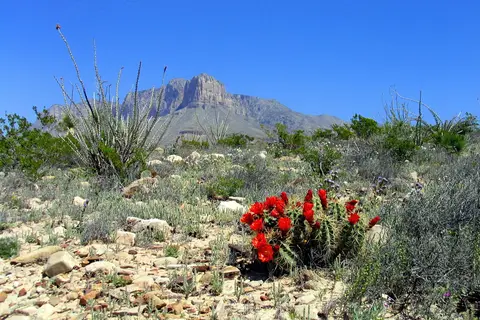
Guadalupe Mountains in August
Score 80/100 · 28% of peak crowds · highs 84°F · 13.3h daylight
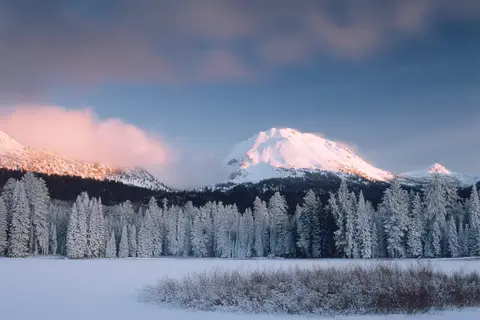
Lassen Volcanic in August
Score 77/100 · 56% of peak crowds · highs 78°F · 13.8h daylight
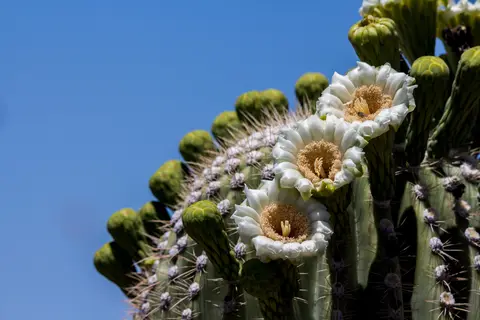
Saguaro in August
Score 72/100 · 23% of peak crowds · highs 96°F · 13.4h daylight
Top 10 for August
| # | Park | Verdict | Score | Crowds vs peak | High/Low | Daylight |
|---|---|---|---|---|---|---|
| 1 | Guadalupe Mountains National Park | Best window | 80 | 28% | 84°F/62°F | 13.3h |
| 2 | Lassen Volcanic National Park | Best window | 77 | 56% | 78°F/45°F | 13.8h |
| 3 | Saguaro National Park | Shoulder | 72 | 23% | 96°F/66°F | 13.4h |
| 4 | Wrangell–St. Elias National Park | Peak crowds | 72 | 78% | 67°F/40°F | 15.9h |
| 5 | Capitol Reef National Park | Shoulder | 71 | 51% | 88°F/63°F | 13.7h |
| 6 | Crater Lake National Park | Peak crowds | 71 | 76% | 69°F/42°F | 14h |
| 7 | Great Sand Dunes National Park | Peak crowds | 71 | 73% | 78°F/50°F | 13.6h |
| 8 | Mesa Verde National Park | Peak crowds | 71 | 74% | 79°F/57°F | 13.6h |
| 9 | Shenandoah National Park | Shoulder | 70 | 56% | 83°F/61°F | 13.7h |
| 10 | Gateway Arch National Park | Shoulder | 69 | 46% | 88°F/66°F | 13.7h |
Score = 45% weather comfort (NOAA 1991–2020 normals) + 35% quietness (NPS visitation 2021–2025) + 20% daylight, with penalties where headline access is typically closed. Identical formula for every park. Methodology.
What the top 10 call for in August
- SPF 50 sunscreenWhy: 4 of the top 10 have highs above 82°F.
- Packable rain jacketWhy: 3 of the top 10 get between 2″ and 3.5″ of precipitation.
- Fleece jacketWhy: 3 of the top 10 have lows between 32°F and 45°F.
Counted from NOAA weather normals. Each park's August page has its own list. Affiliate links: VisitWhen earns from qualifying purchases, at no extra cost to you. Prices can change; Amazon shows the current one.
Think twice in August
At the other end of the ranking: Death Valley (harsh conditions). Every park's page explains exactly why, with the underlying numbers.
Planning notes for August from the park service
Read the August notes for 39 parks
- Acadia: Planning an August sunrise on Cadillac Mountain? Acadia releases its Cadillac Summit Road reservations in two batches at 10 a.m.
- Arches: August at Arches is monsoon season: the park service says late-summer storm cells are violent and often cause flash floods, and roads can close after rain. Heat is the other hazard, with temperatures regularly over 100°F.
- Badlands: August stays hot at Badlands, averaging highs around 91°F, but rainfall drops to about 1.5 inches, down from June, the wettest month. Hailstorms can still hit, so keep an eye on the sky.
- Big Bend: August is deep in Big Bend's hot season, which the park service describes as scorching, with outdoor recreation uncomfortable and unsafe. Many services are reduced in summer compared with winter, when five visitor centers are open and ranger programs run more often.
- Biscayne: August is the wettest month the park lists, at about 9.17 inches of rain, with an average high of 90°F, and it falls in the middle of hurricane season. The regular spiny lobster season opens on August 6 and runs until March 31, with the same limit of six lobsters per person per day as mini-season.
- Bryce Canyon: August averages a high of 77°F at Bryce Canyon and about 12 thunderstorm days, the most of any month, plus roughly 2 inches of rain. Bryce's skies are dark enough to show thousands of stars on a moonless night, and the park runs about 100 astronomy programs a year, best during or just before new-moon week.
- Canyonlands: August is late-summer monsoon season in Canyonlands, when the park service says violent storm cells often set off flash floods. Keep out of washes and canyon bottoms during storms.
- Carlsbad Caverns: In August, plan a Carlsbad Caverns day in two halves. By day, a timed entry ticket gets you into the cavern; you can walk in through the Natural Entrance between 9:30 a.m. and 2:30 p.m. and must be out by 3:30.
- Congaree: August is part of Congaree's hottest and wettest stretch, June through August, when monthly rainfall averages about 4.5 inches and thunderstorms can build quickly. Humid air makes the heat feel worse than the thermometer shows, the park warns.
- Crater Lake: August is one of the three most popular months at Crater Lake, when roads, trails and facilities are usually fully open. The park service says the fall colour and light can appear from mid-August.
- Cuyahoga Valley: August at Cuyahoga Valley averages 79°F by day and 61°F at night with about 4 inches of rain. The park notes that summer conditions such as drought can shift when the fall leaves peak.
- Denali: August is still full bus season at Denali: in 2026 both narrated tours ran into mid-September, and no bus went past mile 43 of the park road because of the Pretty Rocks Landslide. Pick the green transit buses if you want to get off to hike or picnic; the tan tour buses come with a naturalist driver but are not for hopping on and off.
- Death Valley: The park service warns about two hazards at Death Valley besides the roads: extreme heat and flash floods. The park warns that floods come fast and without warning, carry rocks and branches, and can badly injure anyone caught in a canyon or wash, so do not hike canyons during a rainstorm or when rain is likely, and head for higher ground if water rises.
- Glacier: In August 2026, getting to Logan Pass for a long hike meant a shuttle ticket, one per person aged 2 and up, sold only on Recreation.gov or by phone (877-444-6777), never inside the park. Tickets opened about 60 days ahead, with the rest released at 7 p.m.
- Glacier Bay: August is the last month of Glacier Bay's private-boat permit season, which runs to August 31. Most visitors see the park from the water, on anything from a large cruise ship to a single kayak, and the park counts 274 bird species seen here.
- Great Basin: August is Great Basin's stormiest month along with July, averaging about 12 thunderstorms, so the park suggests hiking early in the day. Afternoons near Lehman Caves run in the low 80s°F.
- Grand Canyon: August at Grand Canyon is the heart of the late-summer monsoon. Days often begin clear, with clouds building by mid-morning into powerful thunderstorms; lightning from dry storms can start forest fires, and some storms bring large hail or damaging winds.
- Great Sand Dunes: August at Great Sand Dunes averages highs in the upper 70s°F and lows in the upper 40s. In wet years millions of prairie sunflowers bloom in the dunes and grasslands, peaking in the last two weeks of August, and the mid-summer mosquitoes are gone.
- Great Smoky Mountains: August in the Smokies means heat, haze and humidity, with lower-elevation afternoons in the high 80s or 90s°F and common afternoon thunderstorms; Gatlinburg averages about 10 days of rain this month. Higher up it is far more pleasant: on Mount Le Conte, at 6,593 feet, temperatures above 80°F are extremely rare.
- Grand Teton: August is the one stretch when every Grand Teton campground on the park's list is open at once. In 2026 the shortest seasons were Colter Bay Tent Village (May 22 to September 7) and Lizard Creek (June 12 to September 13), and Jenny Lake and Colter Bay campgrounds closed on September 27.
- Guadalupe Mountains: August is the wettest month in the Guadalupe Mountains, averaging about 3 inches of rain at Pine Springs, and the rainy season can bring locally heavy thunderstorms and some flash flooding. The park notes that afternoon and evening showers often cool things down, making it a pleasant time to visit.
- Haleakalā: August is the last of the summer months the park links to drought in the crater, when hikers staying overnight carry their own water. After dark, the summit is a fine place to watch the sky: the high elevation often gives clearer air, and there is minimal light pollution.
- Indiana Dunes: August is a good month on the Calumet and Porter Brickyard bike trails, which the park describes as especially pretty in late summer and early fall. Summer fronts from Canada occasionally break the heat and bring a few days of pleasant, dry weather.
- Joshua Tree: August nights at Joshua Tree are for stargazing: the park says the Milky Way core is visible in summer, best around new moon, and Pinto Basin Road has the least traffic and the darkest skies. By day, drive paved roads with the air conditioning on and leave unknown dirt roads for winter, since a breakdown in the heat can be deadly.
- Kenai Fjords: August is the last of Kenai Fjords' three primary months. Most visitors see the coast from commercial boat tours; the park points to the marine forecast for Cape Cleare to Gore Point, the open Gulf of Alaska crossed on most park and glacier tours, or for Resurrection Bay on shorter bay tours.
- Kings Canyon: August is Cedar Grove season in Kings Canyon: the canyon is open from May until early or mid-November, and its summer days run hotter than the groves, reaching the 90s°F in midsummer, the park says. Grant Grove, home of the big sequoias, stays cooler at around 76°F by day.
- Kobuk Valley: August is still within Kobuk Valley's summer float season. The Kobuk River is slow and low-gradient, and the park says a float from the village of Ambler through the park to Kiana takes about five to seven days.
- Lassen Volcanic: August is solidly summer at Lassen Volcanic, whose summer conditions run from June through October, though winter conditions can linger into June around Lassen Peak. The park highway crosses avalanche-prone slopes with drops of up to 2,000 feet and is cleared of snow each spring.
- Mount Rainier: August is one of Mount Rainier's warmest, driest months, with Ohanapecosh near 81°F on an average afternoon and Paradise in the low 60s, though rain is possible any day. Parking is limited in many areas, and the park suggests weekday visits to beat the crowds.
- Olympic: August at Olympic's Hurricane Ridge brings ridgetop walks and steeper trails down to subalpine lakes and valleys, and Obstruction Point Road open (mid-June to October 15, weather permitting) for more of them. The park service notes the Day Lodge was lost to fire, so plan on fewer services at the top.
- Pinnacles: August is typically Pinnacles' driest month, with close to no rain on average, and days over 100°F are not unusual. The park recommends a hat, sunscreen and light long sleeves and trousers on its exposed trails.
- Rocky Mountain: August falls inside Rocky Mountain's timed-entry season. In 2026 the park service required a Timed Entry+ reservation for the Bear Lake Road corridor every day from 5 a.m. to 6 p.m., and a standard timed entry for the rest of the park from 9 a.m. to 2 p.m.
- Saguaro: August at Saguaro combines heat and storms. Summer highs range from the mid-90s to the low 110s, with evening lows around 72°F, and the park recommends keeping outdoor activity to before 10 a.m. or after 4 p.m.
- Sequoia: August is warm days and cool evenings in Sequoia's big-tree groves, about 76°F in the afternoon and 50°F at night, with occasional afternoon thundershowers. The foothills below stay very hot, averaging the mid-90s with records above 110°F, and in the foothills rain is rare in summer, since most precipitation falls from January to mid-May.
- Voyageurs: August nights at Voyageurs can bring the northern lights, which the park says can appear at any time of year if the aurora is active and the sky is clear and dark. Suggested viewing spots include the Ash River Visitor Center grounds, the Meadwood Road day-use area and the Rainy Lake Visitor Center.
- White Sands: August is White Sands' wettest month, averaging about 2.07 inches of rain, with highs near 94°F and lows near 62°F. Late-afternoon and evening thunderstorms are common.
- Yellowstone: August is among Yellowstone's busiest months, with all facilities open and all roads typically open, the park says. It is generally warm and very dry: Mammoth Hot Springs averages around 80°F, though Yellowstone Lake reaches only about 72°F, and afternoon thunderstorms or wildfire haze can roll in.
- Yosemite: August is one of the months when all of Yosemite's main roads are open: Tioga Road and Glacier Point Road, which close for snow sometime in November, are clear in summer. In 2026 no timed entry reservation was required, and the park service said it would handle busy days with traffic monitoring, parking management and extra staff, encouraging weekday visits and early planning for weekends.
- Zion: In August the Zion Canyon Scenic Drive is shuttle-only, as it is daily from March through November; cars are not allowed on it while the buses run. Start at the Zion Canyon Visitor Center, where the first shuttle leaves, or skip the park lots entirely, which often fill early in the day, by parking in Springdale and taking the free town shuttle to the walk-in entrance at Zion Canyon Village.
Each park's August page carries the full note and the NPS page it comes from.
Common questions about August
What is the best national park to visit in August?
Guadalupe Mountains National Park scores highest for August (80/100): crowds at 28% of its peak, average highs of 84°F and 13.3 hours of daylight. Lassen Volcanic and Saguaro come next.
Which national parks are least crowded in August?
Compared with each park's own busiest month, the quietest in August are Big Bend (18% of peak), Saguaro (23% of peak) and American Samoa (24% of peak). This leaves out parks in their harsh season or with main access typically closed. The least-crowded ranking covers every month.
Which national parks stay cool in August?
The coolest by average high are Kobuk Valley (57°F), Glacier Bay (59°F) and Denali (60°F), from NOAA 1991–2020 normals at each park's nearest weather station.
Which national parks are best avoided in August?
Death Valley (harsh conditions) sits at the bottom of the August ranking. Each park's August page shows the numbers behind that, starting with Death Valley in August.
How are the parks ranked?
Each park gets a score out of 100 for August: 45% weather comfort (NOAA 1991–2020 normals), 35% quietness (NPS visits, 2021–2025 average) and 20% daylight. Parks whose main access is typically closed lose points and are never marked as a best month. The same formula is used for every park.
All 63 parks in August
No parks match.
Last verified 2026-09-24
Plan your gear after choosing a park
Check the park's weather and trail conditions before choosing sizes or equipment. These options are starting points for comparison; none is required for every visit.
As an Amazon Associate, VisitWhen earns from qualifying purchases, at no extra cost to you.
- Black Diamond Storm 550 headlampSee price on AmazonView on Amazon
A rechargeable light to consider if your plans include walking after dark. Check battery runtime and carry an appropriate backup.
- Compare hiking footwear on Amazon
Choose for your terrain, fit and intended distance; check sizes and return terms.
- Compare packable rain jackets on Amazon
Compare fit, weather protection and packed size with the conditions on your park page.