The Best National Parks to Visit in January — Ranked by Data
The best national parks to visit in January are Channel Islands, Zion and Carlsbad Caverns — ranked by a fixed formula over official NPS crowd data (2021–2025), NOAA weather normals and daylight, with seasonal closures counted against inaccessible parks.
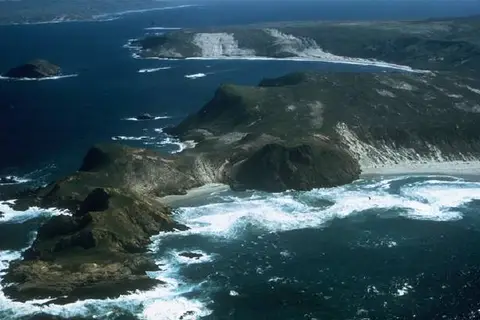
Channel Islands in January
Score 76/100 · 35% of peak crowds · highs 66°F · 10.2h daylight
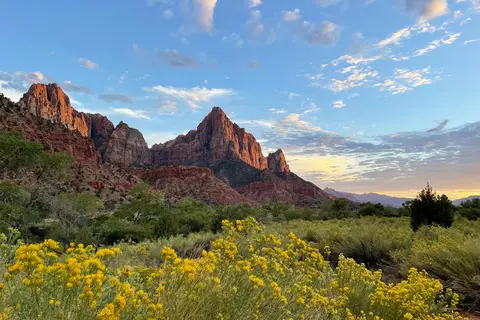
Zion in January
Score 76/100 · 23% of peak crowds · highs 54°F · 9.9h daylight
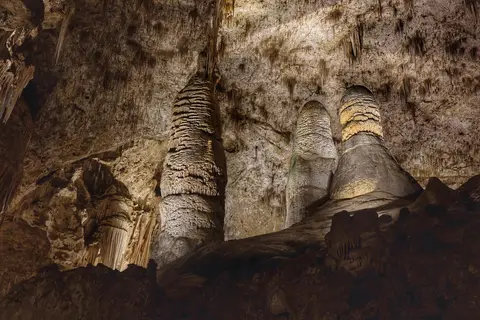
Carlsbad Caverns in January
Score 73/100 · 38% of peak crowds · highs 56°F · 10.3h daylight
Top 10 for January
| # | Park | Verdict | Score | Crowds vs peak | High/Low | Daylight |
|---|---|---|---|---|---|---|
| 1 | Channel Islands National Park | Best window | 76 | 35% | 66°F/46°F | 10.2h |
| 2 | Zion National Park | Best window | 76 | 23% | 54°F/30°F | 9.9h |
| 3 | Carlsbad Caverns National Park | Best window | 73 | 38% | 56°F/34°F | 10.3h |
| 4 | Guadalupe Mountains National Park | Shoulder | 73 | 34% | 54°F/32°F | 10.3h |
| 5 | Big Bend National Park | Best window | 71 | 50% | 69°F/36°F | 10.5h |
| 6 | Mammoth Cave National Park | Best window | 70 | 15% | 48°F/29°F | 9.9h |
| 7 | White Sands National Park | Shoulder | 70 | 43% | 57°F/22°F | 10.2h |
| 8 | Shenandoah National Park | Shoulder | 69 | 8% | 43°F/23°F | 9.8h |
| 9 | Capitol Reef National Park | Shoulder | 67 | 8% | 41°F/21°F | 9.8h |
| 10 | Death Valley National Park | Best window | 67 | 58% | 67°F/43°F | 9.9h |
Score = 45% weather comfort (NOAA 1991–2020 normals) + 35% quietness (NPS visitation 2021–2025) + 20% daylight, with penalties where headline access is typically closed. Identical formula for every park. Methodology.
What the top 10 call for in January
- HeadlampWhy: 9 of the top 10 get under 10.5 hours of daylight.
- Insulated winter jacketWhy: 6 of the top 10 have lows between 20°F and 32°F.
- Fleece jacketWhy: 3 of the top 10 have lows between 32°F and 45°F.
Counted from NOAA weather normals. Each park's January page has its own list. Affiliate links: VisitWhen earns from qualifying purchases, at no extra cost to you. Prices can change; Amazon shows the current one.
Think twice in January
At the other end of the ranking: Denali (harsh conditions), Yellowstone (harsh conditions), Katmai (harsh conditions), North Cascades (harsh conditions), Isle Royale (harsh conditions). Every park's page explains exactly why, with the underlying numbers.
Planning notes for January from the park service
Read the January notes for 48 parks
- Acadia: January at Acadia means the Park Loop Road, including the Cadillac Mountain road, is closed to cars; the park keeps it shut from December 1 to April 14, leaving only Ocean Drive and the Jordan Pond Road section open. Winter temperatures run about 14 to 35°F.
- Arches: January at Arches is cold, the park service says: highs average 30 to 50°F and lows 0 to 20°F. Big snowfalls are uncommon in the park, but even a little snow or ice can make local trails and roads impassable, and roads can close after a storm.
- Badlands: Badlands stays open 24 hours a day all winter, and the park service collects entrance fees year-round. In January, though, roads through the park can be closed in winter or extreme weather, and the park warns that they can be slick and icy.
- Big Bend: January sits in the middle of Big Bend's high season. Once the New Year's crowd leaves, the park still counts the month inside the November-to-April run when the Chisos Mountains Lodge and all developed campgrounds fill every night, and holiday weekends such as Martin Luther King Jr.
- Biscayne: January is in Biscayne's dry season. The park describes its winters as normally dry and mild, with an average January high of 77°F and about 1.93 inches of rain for the month.
- Bryce Canyon: January sits in Bryce Canyon's coldest, snowiest stretch, which the park puts at December through February. Its climate table gives January an average high of 37°F and a low of 15°F, about 17 inches of normal snowfall and a record low of -26°F.
- Canyonlands: January in Canyonlands is the coldest stretch of the year: winter days here average 30 to 50°F and nights 0 to 20°F, according to the park service. Snow rarely piles up deep, but a thin layer or some ice is enough to make trails and roads impassable, and snow can bury cairns so routes are hard to follow; traction aids help on icy sandstone.
- Carlsbad Caverns: In January, as all year, entering Carlsbad Cavern takes a timed entry ticket. The park service strongly recommends reserving your entry time in advance, then paying for the entrance ticket itself at the visitor center, which is open 9 am to 5 pm.
- Channel Islands: January is the middle of the wet season at Channel Islands. The park service says most rain falls between December and March, with sunny, clear days between storms, and ocean water drops to the low 50s in winter.
- Congaree: January sits in Congaree's mild winter, which the park says runs from November through February with afternoons reaching the mid-50s°F and nights that can dip below freezing. Snow is unusual but possible.
- Cuyahoga Valley: January is Cuyahoga Valley's snowiest month, averaging 13 inches of snow, with days around 33°F and nights near 19°F, according to the park's climate table. Lake-effect snow off Lake Erie can change conditions quickly.
- Denali: January keeps Denali in its extreme cold, which typically runs from late October or early November through March. Winter is the predominant season this far north, the park points out, and it is a time for skiing, snowshoeing and winter biking, the last only on the Roadside Bike Trail and the park road.
- Death Valley: January sits in the middle of Furnace Creek Campground's reservation season, which the park service runs from October 15 to April 15. Reservations open six months ahead (July, for a January stay) and close two days before arrival.
- Everglades: January is peak Everglades weather, in the middle of the dry season the park puts at November through April. Afternoons average about 77°F and nights around 53°F, and the park names an abundance of wildlife among the reasons the dry season is so popular.
- Gateway Arch: The park calls winter a perfect time to see the Gateway Arch: in January and February there are no lines for the trams and no waits for the films, and prolonged extreme cold is rare, though the daily mean temperature is only about 29°F. The museum under the Arch keeps its shorter off-season schedule, and the whole site shuts for the first day of the year.
- Glacier: January is when Glacier's ranger-led snowshoe walks begin. In the 2026 season the park ran them on Saturdays and Sundays at 1:00 pm from January 10 to March 15: two hours on snowshoes looking for signs of wildlife, not recommended for children under 6, and cancelled when West Glacier is forecast below 10°F.
- Glacier Bay: January is Glacier Bay's quiet, cold off-season, and the park says to expect limited services in winter. Near sea level the maritime climate keeps it milder than you might think: winter nights average 25 to 40°F and rarely fall into single digits.
- Great Basin: January is Great Basin's quietest time: the park service describes winter as a season of solitude, when a few visitors explore trails and roads on skis and snowshoes and mule deer move down to lower elevations. The park grounds stay open 24 hours a day all year.
- Grand Canyon: January is North Rim off-season at Grand Canyon: the park service opens the North Rim only through November 30 or the first big snowstorm, its campground's tentative reopening date is May 15, 2027, and there is no fuel on the rim. Separately, flash flooding on August 29, 2026 closed the whole North Kaibab Trail along with Phantom Ranch, Bright Angel Campground and the Black and Silver Bridges, with no reopening estimate yet.
- Great Sand Dunes: January is usually Great Sand Dunes' coldest month, the park says, with highs from the teens to low 30s°F and lows from single digits to below zero. Most days are still sunny and calm, and roads are cleared quickly.
- Great Smoky Mountains: In January the Smokies still need a parking tag for any stop longer than 15 minutes: $5 for a day, $15 for a week or $40 for a year, with no price difference by vehicle size. If you expect several visits this year, the annual tag is valid for 12 months from the month of purchase; it comes by mail from the Great Smoky Mountains Association, so allow at least 14 days.
- Grand Teton: January is Grand Teton's coldest, snowiest month: at Moose, the park's long-term records show days around 26°F, nights near 1°F and about 43 inches of snowfall. Ranger-led snowshoe hikes run on Tuesdays and Thursdays from early January (January 6 to March 12 in 2026), with snowshoes provided for anyone 8 or older; reservations open by phone at 307-739-3399 on December 1.
- Guadalupe Mountains: January is one of Guadalupe Mountains' two coldest months: the park service says snow and freezing fog are common in December and January, and snow and ice linger at high elevations all season. It is also deep in the windy season (November through March), when winds over 30 mph are frequent and gusts can hit 50 to 80 mph on exposed ridges.
- Haleakalā: January sits in the middle of the summit's wet months: the park dates its rainy season from November through March, with rain and wind common up top. Mornings at 10,023 feet can reach freezing or below and warm to about 50-60°F by afternoon, and the park's live webcam shows the crater before you commit to the drive.
- Hot Springs: Planning a January soak at Hot Springs? Check hours first: the Buckstaff Bathhouse offers traditional bathing and the Quapaw a mix of traditional and modern, each with its own schedule online.
- Indiana Dunes: January at Indiana Dunes brings shelf ice along Lake Michigan, and the park service is blunt about it: walking on shelf ice is extremely hazardous, people falling through hidden holes can disappear from view, and death is likely. Ponds and creeks are not monitored for safe ice either.
- Joshua Tree: A January weekend at Joshua Tree means a crowded campground: the park service says all of them are usually full on weekends between September and May. The park says first-come sites fill on most weeknights in its spring busy season, which starts in mid-February.
- Katmai: January at Katmai is the dry, cold heart of winter, when temperatures can range anywhere from -35°F to 50°F, the park says, and strong winds blow all year. Most ponds and lakes have been frozen since mid to late fall.
- Kings Canyon: Driving to Kings Canyon in January, assume chains. The park service, which runs Sequoia and Kings Canyon as one park, says chain controls are most frequent between November and March, apply to every vehicle including four-wheel-drives, and come with a 25 mph limit.
- Kobuk Valley: January is Kobuk Valley's coldest stretch: the park gives average January lows of -8°F, with lows of -50°F possible. Winter access is by small plane, snowmobile or on foot, and chartered planes may land on skis at backcountry sites when the weather is clear.
- Lassen Volcanic: January at Lassen Volcanic is deep in the snow season, roughly November to May, when the 30-mile park highway (Highway 89) is closed to cars and becomes an oversnow route. Every trail in the park is buried; there are no groomed or marked routes, and many oversnow routes do not follow the summer trails.
- Mesa Verde: January at Mesa Verde is a drive-and-look visit. Cliff dwelling tours are over until May, Wetherill Mesa is closed for the season (expected back in late spring 2027), and the museum is shut for renovations until then.
- Mount Rainier: January at Mount Rainier is winter at every level of the park. Daytime temperatures at Paradise, 5,400 feet up, typically reach only 33°F, falling to 21°F overnight, while Longmire is a few degrees milder.
- New River Gorge: January at New River Gorge is the coldest stretch of the year: the park's weather page cites Beckley figures of roughly 38°F in the afternoon, dropping to about 19°F overnight. Only two of the four visitor centers, Canyon Rim and Sandstone, keep year-round hours, and both close on New Year's Day; Thurmond Depot and Grandview stay shut from November through May.
- North Cascades: January at North Cascades means heavy snow and rain at high elevations, and avalanches are common in these steep mountains, even in places along the North Cascades Highway, the park says. Primitive camping stays open year-round at Goodell Creek, Gorge Lake and ten walk-in tent sites at Colonial Creek South, and in Stehekin.
- Olympic: In January, Hurricane Ridge is the center of Olympic's winter activity: the park service says snowshoeing, cross-country skiing and sledding draw visitors in the winter months, and the Hurricane Ridge Winter Sports Club runs two rope tows and a Poma lift when the weather allows. The road up can close at any time for weather, so check the alerts or call 360-565-3131 before you drive.
- Pinnacles: January at Pinnacles is cold at night, the park says, with lows that can drop into the low 20s°F and small amounts of snow at higher elevations almost every year between mid-December and January. Wet years can bring the first flowers, such as manzanita, milkmaids and shooting stars.
- Redwood: January at Redwood is wet-season planning. The park service keeps dispersed camping along Redwood Creek closed from October 15 to April 1 because of high water, and Davison Road's two stream crossings to Fern Canyon and Gold Bluffs Beach are harder after rain (high clearance recommended).
- Rocky Mountain: January at Rocky Mountain is a winter trip: the park stays open 24 hours a day, weather permitting, but a valid entrance fee or pass is required at any hour, and the park asks visitors to prepare for winter driving. On the west side, bald eagle closures run from November 15 to March 15 along the Colorado River, the East Shore trail and Columbine Bay, though the Ranger Meadows Loop stays open.
- Saguaro: January is Saguaro's mild season. The park service puts winter days at about 65°F on average with nights near 40°F, and many ranger-led programs run through the winter.
- Sequoia: January is the heart of Sequoia's chain season. The park service says tire chains or cables are most often required from November through March, and under any chain requirement every vehicle in the control zone has to carry them, four-wheel and all-wheel drive included.
- Virgin Islands: January on St. John: the Cruz Bay Visitor Center, two blocks north of the ferry dock on Route 20, opens Monday to Thursday 8:15 a.m. to 4 p.m. and Friday until 1:30 p.m.
- Voyageurs: January opens Voyageurs' winter equipment rental: from January through March the Rainy Lake Visitor Center rents snowshoes and cross-country skis Friday to Monday, 10 a.m. to 4 p.m., at $10 a pair for adults and $5 for children 16 and under, with online reservations opening January 1. Sizes are limited, so the park suggests calling the visitor center ahead at (218) 286-5258 to check the size you need.
- White Sands: January at White Sands: the park is open every day except Thanksgiving and Christmas, so New Year's visits are fine. What can interrupt a trip is missile testing on the range next door, which can close the road into the park for up to three hours, along with US 70 between Alamogordo and Las Cruces.
- Wind Cave: In January, Wind Cave's surface stays open around the clock, but the park service warns that winter storms frequently bring snow and sometimes close park roads for a while, and that snow can cut off remote parts of the park. Underground nothing changes: the cave holds at 54°F (11°C) all year.
- Yellowstone: January is the middle of Yellowstone's oversnow season, which the park service runs from mid-December to mid-March. The only road open to cars all year is the one between the North Entrance at Gardiner and the Northeast Entrance; the rest of the interior is reached by approved commercially guided snowcoaches and snowmobiles, or through the non-commercially guided snowmobile program.
- Yosemite: January visits to Yosemite stay in the lower park: Tioga Road and Glacier Point Road are closed for snow from November until late May or early June, the park service says. Yosemite Valley is still reachable year-round on Wawona Road (Highway 41), El Portal Road (Highway 140) and Big Oak Flat Road, but chains may be required at any point between late fall and early spring, so keep a set in the car and check road conditions before you go.
- Zion: January sits inside Zion's non-shuttle season, which the park service says usually runs December through February, so you can normally drive your own car up the Zion Canyon Scenic Drive. The trade-off is parking: the park's own lots often fill early in the day, and when they do, the easy fallback is paid parking in Springdale plus the free Springdale Line shuttle into the park.
Each park's January page carries the full note and the NPS page it comes from.
Common questions about January
What is the best national park to visit in January?
Channel Islands National Park scores highest for January (76/100): crowds at 35% of its peak, average highs of 66°F and 10.2 hours of daylight. Zion and Carlsbad Caverns come next.
Which national parks are least crowded in January?
Compared with each park's own busiest month, the quietest in January are Badlands (5% of peak), Great Sand Dunes (6% of peak) and Mesa Verde (7% of peak). This leaves out parks in their harsh season or with main access typically closed. The least-crowded ranking covers every month.
Which national parks are warm in January?
The warmest by average high are American Samoa (88°F), Virgin Islands (84°F) and Everglades (78°F), from NOAA 1991–2020 normals at each park's nearest weather station.
Which national parks are best avoided in January?
Denali (harsh conditions), Yellowstone (harsh conditions), Katmai (harsh conditions), North Cascades (harsh conditions) and Isle Royale (harsh conditions) sit at the bottom of the January ranking. Each park's January page shows the numbers behind that, starting with Denali in January.
How are the parks ranked?
Each park gets a score out of 100 for January: 45% weather comfort (NOAA 1991–2020 normals), 35% quietness (NPS visits, 2021–2025 average) and 20% daylight. Parks whose main access is typically closed lose points and are never marked as a best month. The same formula is used for every park.
All 63 parks in January
No parks match.
Last verified 2026-09-24
Plan your gear after choosing a park
Check the park's weather and trail conditions before choosing sizes or equipment. These options are starting points for comparison; none is required for every visit.
As an Amazon Associate, VisitWhen earns from qualifying purchases, at no extra cost to you.
- Black Diamond Storm 550 headlampSee price on AmazonView on Amazon
A rechargeable light to consider if your plans include walking after dark. Check battery runtime and carry an appropriate backup.
- Compare hiking footwear on Amazon
Choose for your terrain, fit and intended distance; check sizes and return terms.
- Compare packable rain jackets on Amazon
Compare fit, weather protection and packed size with the conditions on your park page.