The Best National Parks to Visit in May — Ranked by Data
The best national parks to visit in May are Lake Clark, North Cascades and Katmai — ranked by a fixed formula over official NPS crowd data (2021–2025), NOAA weather normals and daylight, with seasonal closures counted against inaccessible parks.
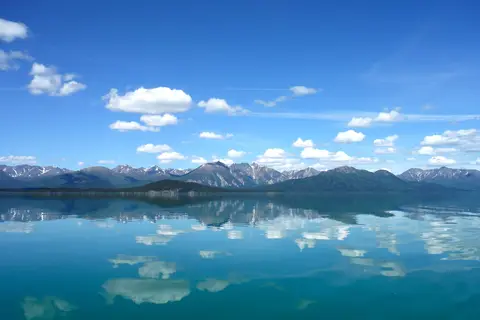
Lake Clark in May
Score 96/100 · 7% of peak crowds · highs 59°F · 17.4h daylight
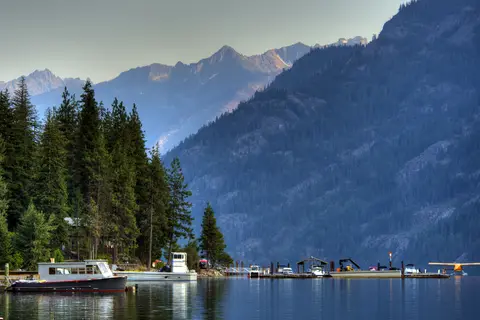
North Cascades in May
Score 96/100 · 11% of peak crowds · highs 69°F · 15.2h daylight
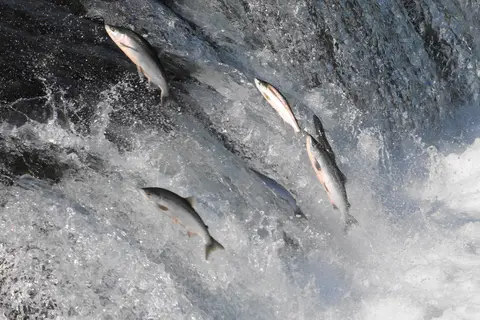
Katmai in May
Score 95/100 · 1% of peak crowds · highs 52°F · 16.8h daylight
Top 10 for May
| # | Park | Verdict | Score | Crowds vs peak | High/Low | Daylight |
|---|---|---|---|---|---|---|
| 1 | Lake Clark National Park | Best window | 96 | 7% | 59°F/39°F | 17.4h |
| 2 | North Cascades National Park | Best window | 96 | 11% | 69°F/44°F | 15.2h |
| 3 | Katmai National Park | Best window | 95 | 1% | 52°F/33°F | 16.8h |
| 4 | Gates of the Arctic National Park | Best window | 94 | 12% | 56°F/34°F | 20.1h |
| 5 | Wrangell–St. Elias National Park | Best window | 94 | 18% | 62°F/31°F | 17.5h |
| 6 | Isle Royale National Park | Best window | 92 | 17% | 58°F/37°F | 15.2h |
| 7 | Denali National Park | Best window | 87 | 28% | 54°F/33°F | 18.1h |
| 8 | Kenai Fjords National Park | Best window | 85 | 23% | 53°F/39°F | 17.1h |
| 9 | Rocky Mountain National Park | Best window | 85 | 40% | 61°F/35°F | 14.4h |
| 10 | Theodore Roosevelt National Park | Best window | 84 | 45% | 67°F/41°F | 15h |
Score = 45% weather comfort (NOAA 1991–2020 normals) + 35% quietness (NPS visitation 2021–2025) + 20% daylight, with penalties where headline access is typically closed. Identical formula for every park. Methodology.
What the top 10 call for in May
- Fleece jacketWhy: 9 of the top 10 have lows between 32°F and 45°F.
- Packable rain jacketWhy: 4 of the top 10 get between 2″ and 3.5″ of precipitation.
- Sturdy hiking bootsWhy: worth having at every park, in every month.
Counted from NOAA weather normals. Each park's May page has its own list. Affiliate links: VisitWhen earns from qualifying purchases, at no extra cost to you. Prices can change; Amazon shows the current one.
Think twice in May
At the other end of the ranking: Lassen Volcanic (headline access typically closed), Glacier (headline access typically closed). Every park's page explains exactly why, with the underlying numbers.
Planning notes for May from the park service
Read the May notes for 46 parks
- Acadia: Late May is when Acadia's Cadillac Summit Road reservations start: in 2026 the park service required them from Wednesday, May 20. Before that date you can drive to the top of Cadillac Mountain without one.
- Arches: May is one of Arches' two temperate seasons, the park service says (spring, April through May), with daytime highs averaging 60 to 80°F. It is also busy: during peak visitation, spring through fall from 8 a.m. to 3 p.m., expect long lines at the entrance and full lots, and when parking runs out the park may hold cars at the entrance for three to five hours.
- Badlands: May warms Badlands to afternoons in the low 70s°F, and it is one of the wetter months, with close to 3 inches of rain on average. If showers are forecast, the park strongly recommends a rain jacket and waterproof or water-resistant boots for hiking.
- Big Bend: May is when Big Bend turns hot. The park service says that from May through September temperatures over most of the park pass 100°F by late morning and keep climbing through the day, and that direct sun runs 15 to 20 degrees hotter than the shade readings.
- Biscayne: May is the last month before hurricane season, which runs from June 1 to November 30, and the park expects heavy insect populations through the warmer months. Mosquitoes and no-see-ums (biting midges) live on Elliott Key all year, so repellent belongs in the bag in any month.
- Bryce Canyon: May at Bryce Canyon averages a high of 64°F and a low of 37°F, and the park notes temperatures fall below freezing nearly every night from October to May. The free park shuttle runs through the Bryce Amphitheater area from April through mid-October; it is not mandatory but is highly recommended because viewpoint parking is limited.
- Canyonlands: May is prime time in Canyonlands: spring, April through May, is one of its two temperate seasons, with daytime highs around 60 to 80°F and nights of 30 to 50°F, the park service says. That makes it one of the most popular months too.
- Capitol Reef: May at Capitol Reef falls inside the Gifford House season: the store and museum in Fruita is open every day from 9 a.m. to 4:30 p.m. between March 14 and late November. The park and its campgrounds are open year-round.
- Channel Islands: May belongs to the western gulls. The islets of Anacapa hold the largest protected breeding colony of the species in the world, with more than 10,000 birds gathering to nest from May through July, and females lay two or three olive-green, dark-marked eggs in late April or May.
- Congaree: May closes out Congaree's spring, with highs in the mid to upper 70s°F and around 3 inches of rain on average, by the park's seasonal guide. The park recommends spring and fall above all, when temperatures are most comfortable.
- Crater Lake: May at Crater Lake is a transition month. The park service gives average highs of 50°F, lows of 28°F, about 20 inches of new snow, and more than 6 feet of snow on the ground at park headquarters.
- Cuyahoga Valley: May warms Cuyahoga Valley to average days of 69°F and nights of 48°F, with about 4 inches of rain and only a trace of snow, by the park's figures. The park describes spring as the time visitors are anxious to get back on the trails after a long winter.
- Denali: May is when Denali's summer opens. In 2026 the Natural History Tour began on May 13 and the Tundra Wilderness Tour on May 20, and because of the Pretty Rocks Landslide no bus went beyond mile 43 of the park road.
- Death Valley: Planning a May trip to Death Valley? The park service says not to hike in the valley or at lower elevations when it is hot; the mountains are generally cooler and offer some relief.
- Everglades: May is when the Everglades turns from dry to wet: the park says the summer wet season runs from about mid-May to November. Expect highs near 90°F with humidity above 90% and heat index readings over 100°F, plus afternoon thunderstorms that often pass quickly.
- Glacier: May at Glacier comes before the summer season, which the park service says generally runs from late May through September. Most services in and near the park do not reopen until late May or early June, so plan to be self-sufficient.
- Glacier Bay: May is when Glacier Bay's season begins. The park dates its main visitor season from late May through early September, and travel options from May through September include scheduled and charter flights, Alaska Marine Highway ferries, cruise ships, tour boats and charters.
- Great Basin: May brings desert colour to Great Basin as prickly-pear cactus, Indian paintbrush and globe mallow bloom, the park says, even while the high elevations keep their snowpack. Afternoons at Lehman Caves reach the mid-60s°F.
- Grand Canyon: May brings more frequent warm spells to Grand Canyon, though the park notes snow on the rims is not uncommon even now. Daily swings are huge in the dry season, with highs often more than 30 degrees above lows.
- Great Sand Dunes: Late May is the average peak of Medano Creek, and the park says late May and early June are the best chance to see surge flow, waves up to about 20 inches running across the sand. Weekends then are extremely crowded, with traffic lines and full campgrounds, so come on a weekday.
- Great Smoky Mountains: May trips to the Smokies: budget for a parking tag. The park service requires one for every vehicle that parks for more than a quarter hour, at $5 per day or $15 per week, valid until 11:59 p.m.
- Grand Teton: May is Grand Teton's opening month. The Teton Park Road opens to cars on May 1, and in 2026 the Jenny Lake Visitor Center opened May 15 and Colter Bay's on May 8, after Craig Thomas in Moose (from April 10).
- Haleakalā: May falls outside the stretch the park calls its summit rainy season, yet Hosmer Grove, the drive-up campground just past the entrance at nearly 7,000 feet, sits in the cloud belt, and campers there are told to come ready for rain and cold. Its six sites are $20 a night, sleeping six people and two tents at most, with potable water, grills and pit toilets.
- Indiana Dunes: May is wildflower time at Indiana Dunes: the park says spring flowers are abundant along the Little Calumet River in April and May. Ticks can be active whenever it is warmer than 40°F, so walk in the centre of trails, wear light long sleeves and tucked-in trousers, and check yourself, your children and your pets after a hike.
- Joshua Tree: May is the tail of Joshua Tree's spring busy season, which the park service puts from mid-February to mid-May, when first-come sites fill most weeknights. Weekends stay busy until the end of May, and the park still recommends reserving for any weekend or holiday.
- Katmai: May is the run-up to Katmai's season. Snow still covers the higher elevations until late May or early June, and spring tends to be wet and cool between the stormy north Pacific and the Bering Sea.
- Kenai Fjords: May is a month of reduced services at Kenai Fjords, the park says, and the Exit Glacier road usually stays closed to cars until sometime in May. The visitor centers open on Memorial Day weekend, the weekend before the last Monday of May.
- Kings Canyon: May is when Kings Canyon's Cedar Grove opens: the park service says it is typically open from May through early to mid-November, with dates that move with the weather. Spring at these elevations runs roughly from April to mid-June, so late snowstorms are still common and chains may be required on park roads.
- Kobuk Valley: Getting to Kobuk Valley in May takes the same planning as any month. There are no roads into the park; commercial flights reach Kotzebue from Anchorage or Bettles from Fairbanks, and authorized air taxis do the rest.
- Lake Clark: May at Lake Clark is the lead-up to the main season: most visitors come between June and October, when it is warmer and more lodging, transportation and guide services operate. Frost and snow are still possible until early June.
- Lassen Volcanic: May is usually when Lassen's highway reopens, after crews clear snow that can drift up to 40 feet deep; in 2026 the park expected the road to be fully open by Memorial Day weekend, though in heavy years it has stayed shut until early July. Once a section is cleared, walkers and cyclists can use it before cars.
- Mount Rainier: May warms Mount Rainier's lower valleys first. On a typical May day Ohanapecosh reaches about 70°F and Longmire the low 60s, while Paradise is still near 50°F, with nights around freezing up there.
- North Cascades: May is when North Cascades' visitor season opens. In 2026 the Wilderness Information Center in Marblemount opened daily from May 15 (7 to 11:30 a.m. and 12:30 to 4 p.m.), the Skagit Information Center in Newhalem opened on weekends (Friday to Sunday) from May 15, and the North Cascades Visitor Center in Newhalem opened daily from May 18, 9 a.m. to 5 p.m.
- Olympic: Spring at Olympic's Hurricane Ridge means wildflowers in the subalpine meadows and blacktail deer grazing among them, the park service says. The road to the ridge can still close at short notice for weather, and from October through May some of the park's roads, campgrounds and facilities are closed or keep shorter hours.
- Pinnacles: May at Pinnacles shifts its wildflowers toward plants that like hotter, drier weather, the park says: chamise, buckwheat, clarkias, penstemons and roses. Plan around the caves: from mid-May to mid-July all of Bear Gulch Cave closes while the Townsend's big-eared bats raise their young, the largest maternity colony between San Francisco and Mexico.
- Redwood: May at Redwood comes after Redwood Creek's high-water closure, which the park service lifts on April 1 (dates can shift with the creek), so dispersed backcountry camping along the creek is open again. The Tall Trees Trail keeps its year-round reservation rule.
- Rocky Mountain: Late May is when Rocky Mountain's timed-entry season starts: in 2026 it began on May 22, with reservations needed to enter between 9 a.m. and 2 p.m., plus a Timed Entry+ reservation for the Bear Lake Road corridor from 5 a.m. to 6 p.m. Reservations for the first window opened on Recreation.gov on May 1 at 8 a.m.
- Saguaro: May is peak saguaro bloom, inside the late-April-to-early-June window the park gives for the white flowers on the trunk and arm tips. It is also when the heat builds: the park says summer-like temperatures can arrive from early spring, and in late spring and summer ranger programs are offered only intermittently.
- Sequoia: May in Sequoia still counts as spring at most elevations, according to the park service, with melting snow in the groves and the chance of a late snowstorm. Mineral King, one of the parks' two seasonal areas, opens from spring to fall, while Giant Forest and Lodgepole, the Foothills and Grant Grove offer services all year.
- Shenandoah: By May all of Shenandoah's main services are running. On the 2026 schedule Big Meadows Lodge opened May 4, Dickey Ridge Visitor Center on May 1 (Friday to Tuesday, 9 a.m. to 4:30 p.m.), and the Skyland Stables, which need a reservation, also from May 1.
- White Sands: May warms White Sands to an average high of 88°F and a low of 50°F, with record highs of 104°F. Heat exhaustion and dehydration are behind many of the dozens of search-and-rescue calls rangers answer each year.
- Wind Cave: May at Wind Cave is part of the spring-to-fall stretch the park describes as busy, with long waits for same-day cave tickets and tours that often sell out soon after the visitor center opens. Below ground it is always 54°F, so bring long sleeves, and leave bags, food, drinks and walking sticks behind; none are allowed in the cave.
- Wrangell–St. Elias: May starts Wrangell-St. Elias' summer, which the park puts at mid-May to mid-September.
- Yellowstone: May is Yellowstone's reopening month. For 2027 the park service projects the East Entrance over Sylvan Pass and Canyon Village to Bridge Bay to open May 7, the South Entrance, Craig Pass and the road to Lake Village and Tower Fall on May 14, and the high Dunraven Pass between Canyon and Tower Fall, together with the Beartooth Highway outside the Northeast Entrance, on May 28.
- Yosemite: May is the month Yosemite starts reopening its high country, though not reliably: the park service says Tioga Road and Glacier Point Road, closed by snow since November, usually reopen in late May or early June, and it posts plowing updates from April 15. Until they open, plan around the valley, reached all year by Wawona, El Portal and Big Oak Flat roads.
- Zion: Coming to Zion in May? Expect to use the shuttle.
Each park's May page carries the full note and the NPS page it comes from.
Common questions about May
What is the best national park to visit in May?
Lake Clark National Park scores highest for May (96/100): crowds at 7% of its peak, average highs of 59°F and 17.4 hours of daylight. North Cascades and Katmai come next.
Which national parks are least crowded in May?
Compared with each park's own busiest month, the quietest in May are Katmai (1% of peak), Lake Clark (7% of peak) and North Cascades (11% of peak). This leaves out parks in their harsh season or with main access typically closed. The least-crowded ranking covers every month.
Which national parks are best avoided in May?
Lassen Volcanic (main access typically closed) and Glacier (main access typically closed) sit at the bottom of the May ranking. Each park's May page shows the numbers behind that, starting with Lassen Volcanic in May.
How are the parks ranked?
Each park gets a score out of 100 for May: 45% weather comfort (NOAA 1991–2020 normals), 35% quietness (NPS visits, 2021–2025 average) and 20% daylight. Parks whose main access is typically closed lose points and are never marked as a best month. The same formula is used for every park.
All 63 parks in May
No parks match.
Last verified 2026-09-24
Plan your gear after choosing a park
Check the park's weather and trail conditions before choosing sizes or equipment. These options are starting points for comparison; none is required for every visit.
As an Amazon Associate, VisitWhen earns from qualifying purchases, at no extra cost to you.
- Black Diamond Storm 550 headlampSee price on AmazonView on Amazon
A rechargeable light to consider if your plans include walking after dark. Check battery runtime and carry an appropriate backup.
- Compare hiking footwear on Amazon
Choose for your terrain, fit and intended distance; check sizes and return terms.
- Compare packable rain jackets on Amazon
Compare fit, weather protection and packed size with the conditions on your park page.